
IBM Verify Mobile App
(Work in Progress)
IBM Verify Mobile is the authentication companion app for IBM Security Verify, supporting multi-factor authentication, digital credentials, and secure account access. The v3 initiative rebuilds the app on a modern native foundation, improving information architecture, platform-appropriate patterns, and cross-platform consistency.
My role: Design Lead
I led the experience vision and system foundations for Verify Mobile v3, focusing on clarity, quality, and scalability across iOS and Android. The work centered on guiding cross-disciplinary decisions, reducing ambiguity, and balancing near-term delivery with long-term platform strategy.
Key responsibilities
Led co-creation sessions with iOS and Android engineers to define native interaction patterns
Partnered with product leadership to align experience decisions with enterprise needs
Collaborated with visual, content, and research teams to modernize interactions and contribute new mobile components to IBM’s design system
A core part of the role was navigating competing priorities and differing interpretations across teams. By clarifying requirements and establishing shared systems and workflows, design-to-development collaboration became more predictable and efficient across global teams.

Our users
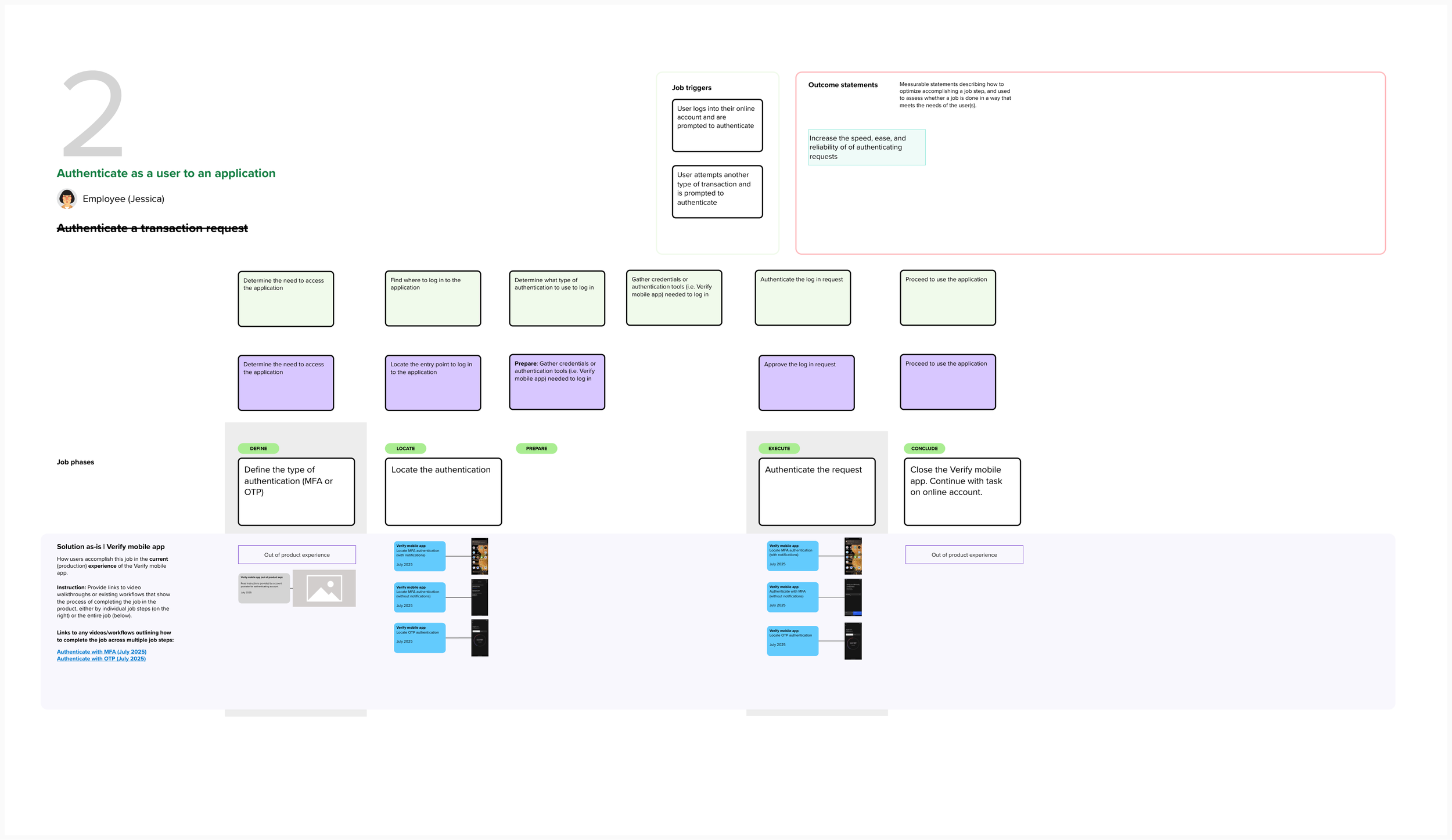
The redesign was grounded in a small set of critical jobs (jobs-to-be-done) across employees and consumers.
Employee
Set up and use organization-defined authentication methods to securely access work accounts and applications.
Consumer
Set up and use authentication methods to securely access personal accounts and services.
Employee and consumer
Manage and organize authentication accounts within the Verify Mobile app.
These jobs informed priorities for onboarding, authentication, recovery flows, and the introduction of digital credentials.
Objective
Modernize the Verify Mobile experience by streamlining identity workflows and increasing clarity, trust, and confidence for enterprise users.
The redesign aimed to:
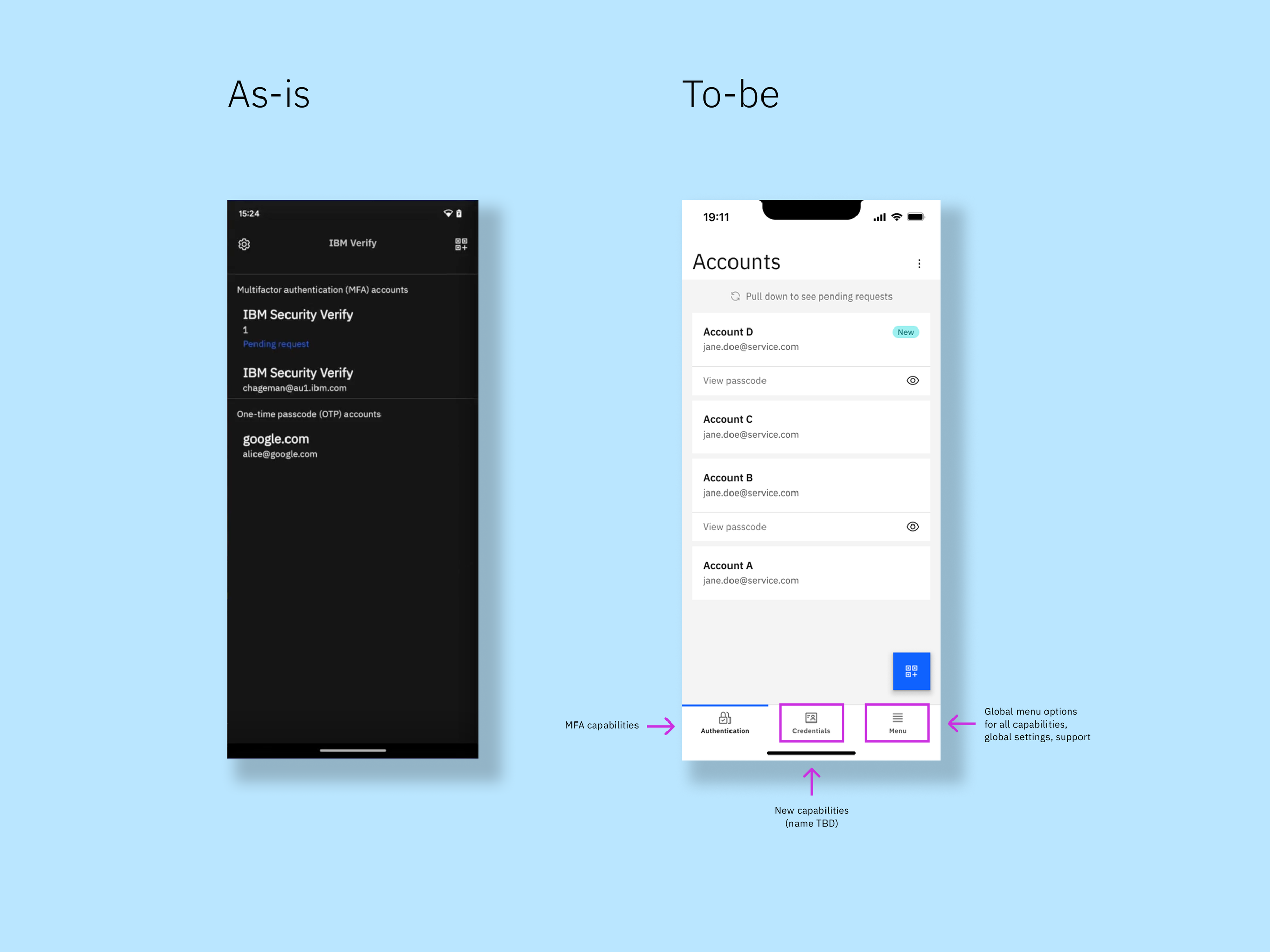
Deliver a modern, native mobile authentication experience
Create a cohesive, secure, and predictable interface
Reduce friction across onboarding and verification flows
Introduce a Digital Credential Wallet
Support industry standards for secure credential issuance and presentation
Improve usability and reliability to drive adoption
Collaboration
This months-long initiative required close alignment and rapid iteration across a distributed team.
Highlights include:
Deep partnership with iOS and Android engineers, including dedicated on-site working sessions with a teammate visiting from Australia
Shared working sessions with visual, content, and research designers to create mobile-first components and scalable messaging
A research-informed approach grounded in platform guidelines and mobile best practices
Ways of working evolved during the project:
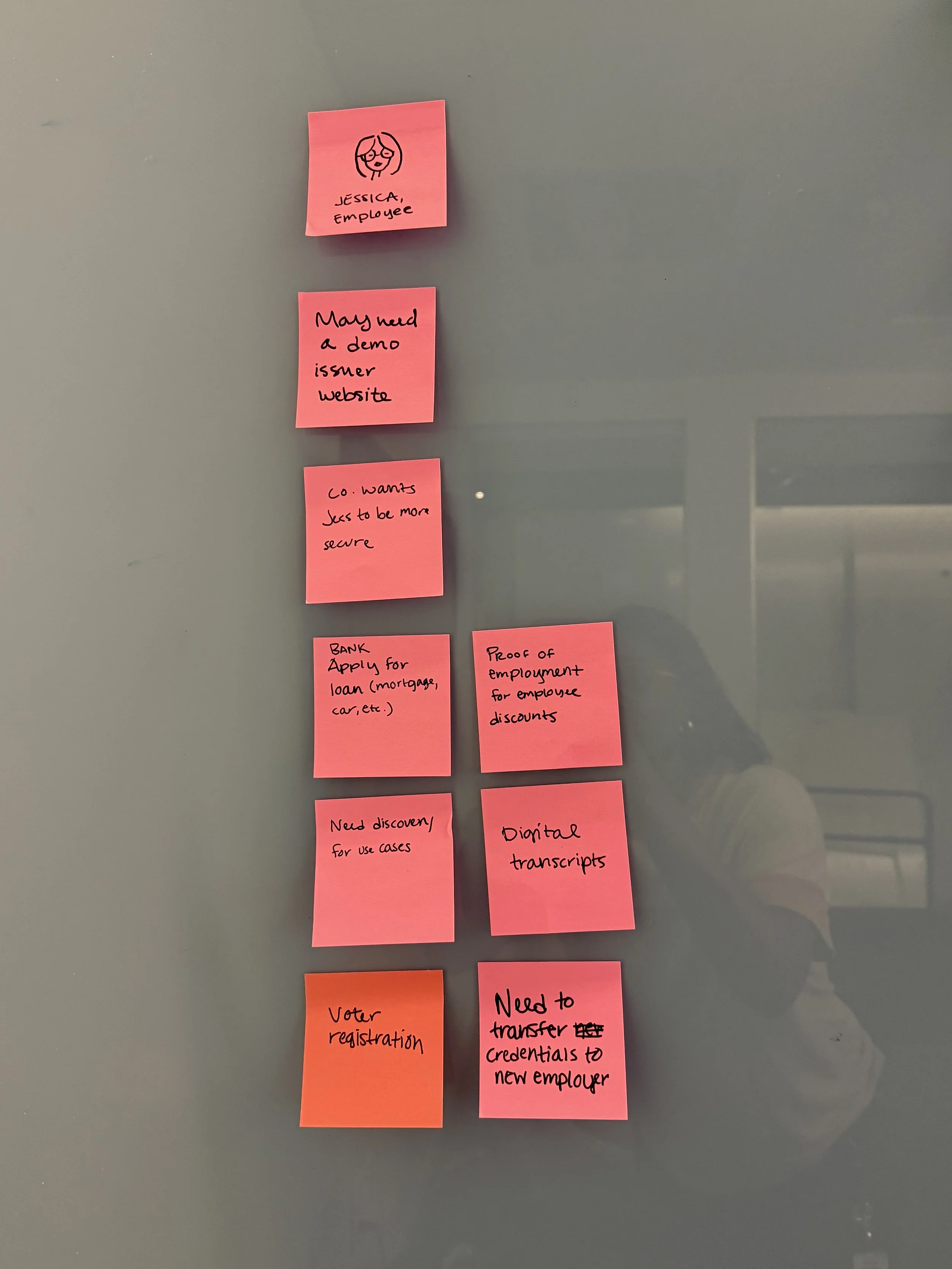
Moving from ad-hoc whiteboarding to shared systems, libraries, and clearer documentation
Establishing regular cross-functional reviews to validate direction and feasibility
Contributing mobile patterns and tokens back into IBM’s design system to support reuse across products



Solution
As Verify Mobile v3 rolls out, the redesign delivers:
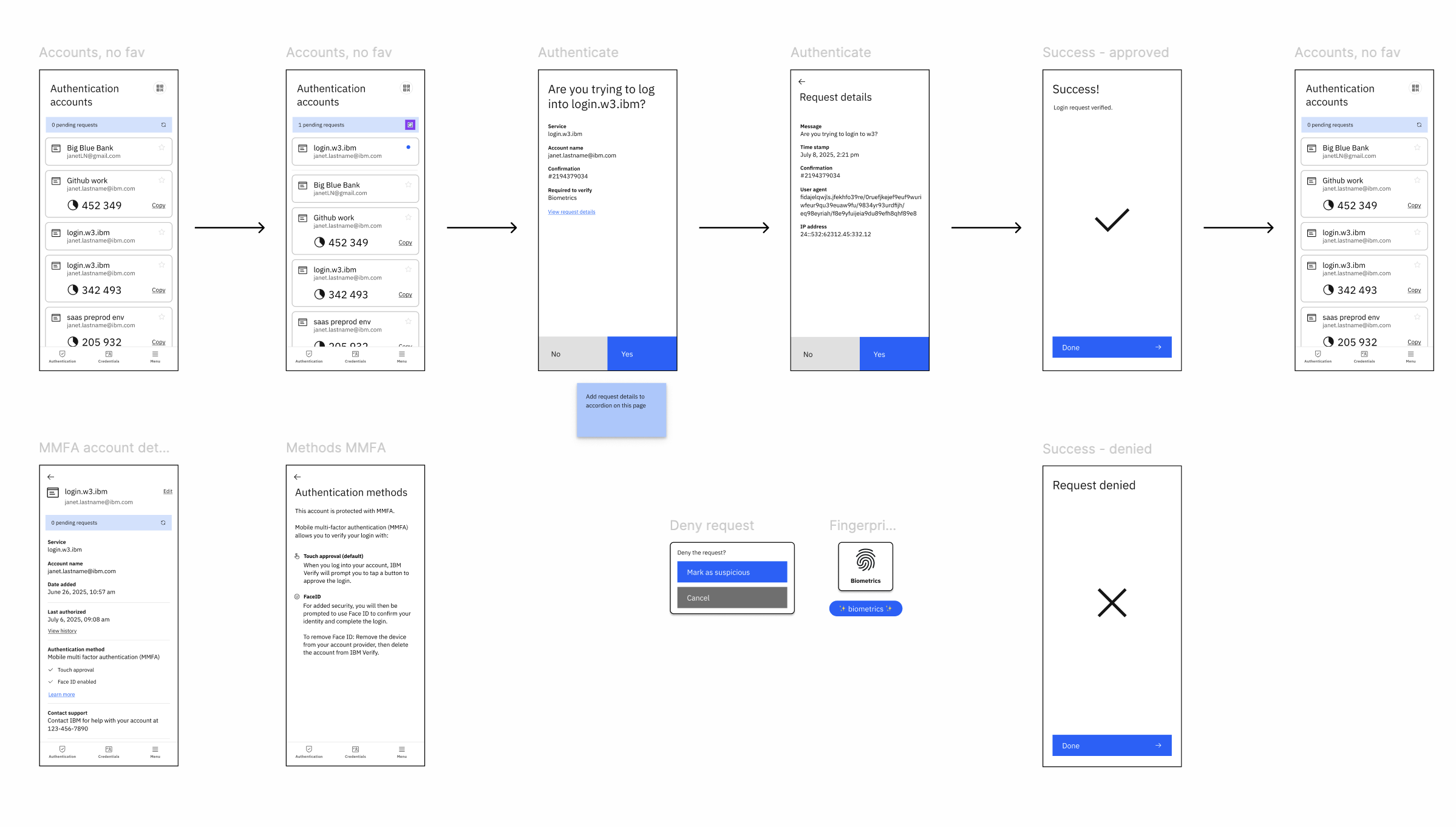
A modern, native-optimized mobile experience with clearer workflows and predictable interactions
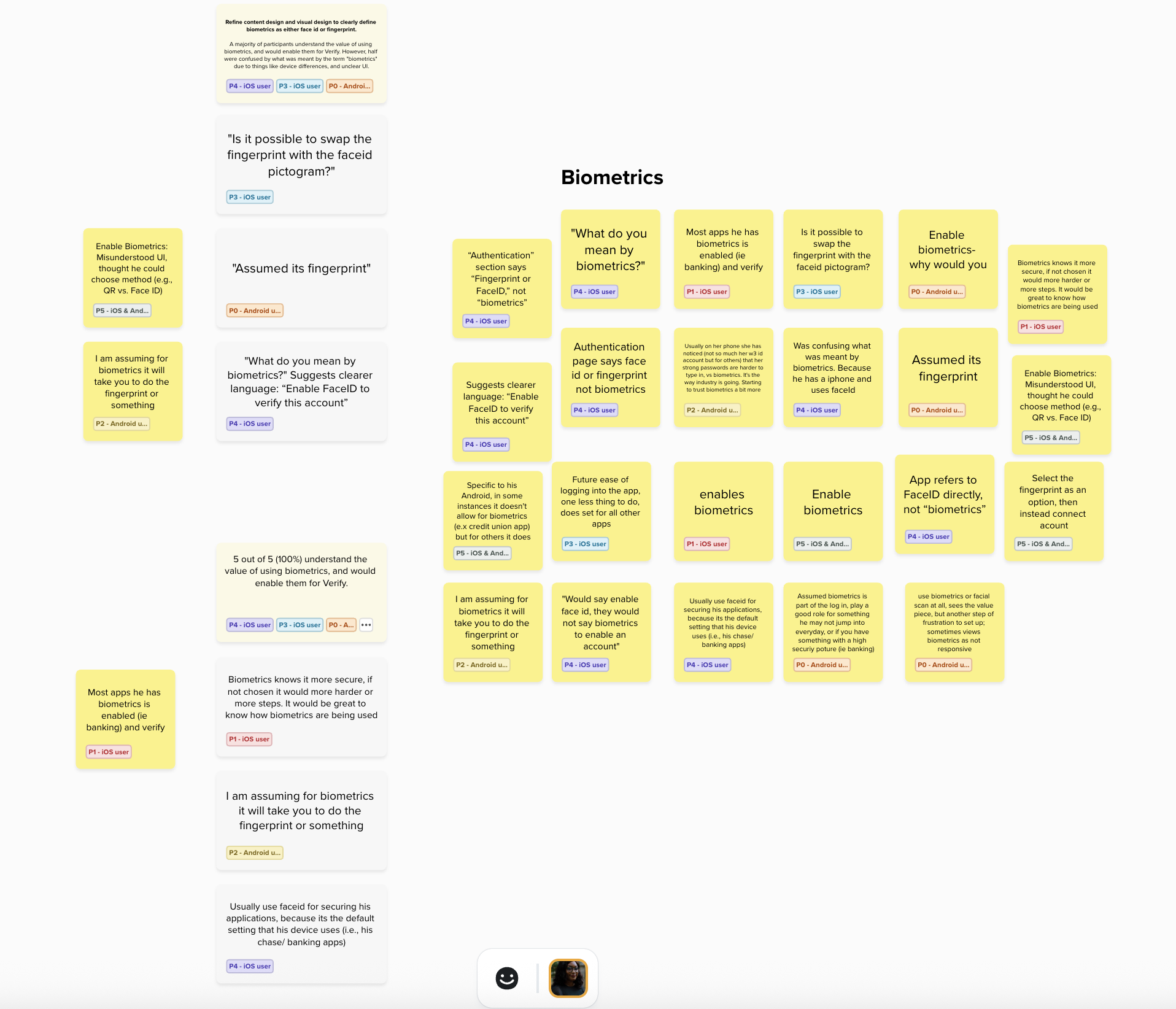
Streamlined onboarding, authentication, and credential flows validated through research and iteration
Improved efficiency across design and engineering through shared foundations and clearer requirements
A stronger, more scalable mobile design system supporting consistency across platforms
Improved clarity, usability, and cohesion across iOS and Android
Early signals show reduced friction in critical flows and increased internal adoption of shared components.

Illustrations and animation played a crucial part in making the brand and the voice of the app come to life. Illustrations by Sarah Pedregon.
Reflection
Verify Mobile v3 was a focused, months-long effort built on collaboration, iteration, and systems thinking. My role emphasized platform-level leadership: shaping vision, aligning teams, and establishing foundations that extend beyond a single release.
The work balances immediate delivery with long-term architecture, strengthening the identity experience while enabling future capabilities in authentication and digital credentials.